SHARK NURSERIES AND JUVENILE HABITAT USE
Building on the foundation of my masters research (see below) my PhD research shifts from describing long-term population trends to understanding the mechanisms that generate them. At the University of Miami, within the Shark Research and Conservation Program, my work focuses on the movement ecology, habitat use, and population dynamics of juvenile sharks in highly human-altered coastal ecosystems of South Florida.
A central theme of this research is identifying and characterizing shark nursery habitats—areas where juveniles exhibit elevated residency, repeated use, and enhanced survival. By integrating satellite and acoustic telemetry, physiological metrics, and spatial modeling, my dissertation will examine how climate variability, habitat modification, and human activity interact to shape survival, residency, and connectivity during these vulnerable early life stages. In doing so, this work aims to refine how shark nurseries are defined and recognized in dynamic coastal systems, providing a science-based framework for protecting habitats that disproportionately contribute to population persistence.
This research is supported by funding from the Guy Harvey/Florida Seagrant Fellowship, the National Geographic Society American Keystone Species Grant, and the Everglades Foundation through its ForEverglades Fellowship.
POPULATION DYNAMICSAND BIODIVERSITY TRENDS
During my master’s program under the guidance of Dr. Easton White, I focused on leveraging big data to explore population dynamics in elasmobranchs and marine turtles. You can learn more about Dr. White’s innovative work at the Quantitative Marine Ecology Lab.
My research utilized nearly 30 years of data collected by trained dive masters from UnderSea Hunter to investigate long-term population trends of sharks, rays, and marine turtles. Specifically, I aimed to uncover how environmental variability influences these trends. The dataset, derived from 35,706 dives conducted across 17 sites, represents one of the largest underwater visual census (UVC) datasets for sharks and rays globally.
These surveys were conducted at Cocos Island National Park, a remote, uninhabited island 550 km off the coast of mainland Costa Rica. Established in 1984, Cocos Island’s Marine Protected Area (MPA) is the world’s oldest and serves as a natural laboratory for studying the effects of environmental variability on marine ecosystems.

ANTROPOGENIC IMPACTS
Broadly, I am interested in understanding how people interact with coastal environments. I employ a variety of tools including traditional surveys and nontraditional data mining methodology to examine human use of coastal environments, assess stakeholders, explore patterns in biodiversity and ultimately promote conservation and sustainable coastal habitat use.
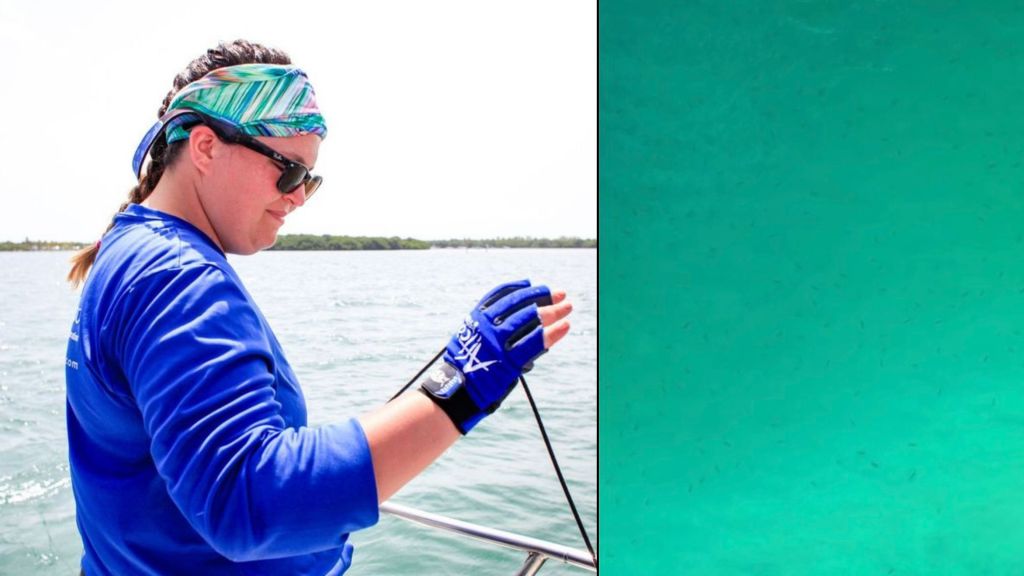
I was previously a research assistant at Florida State University. At FSU, I will used a variety of methods to assess marine turtle vulnerability to vessel strikes. The results of this project will help to better inform management and lead to the development of specific plans to reduce turtle-vessel interactions.
You can learn more about the Marine Turtle Research, Ecology, and Conservation Group at marineturtleresearch.com
 Julia Saltzman, M.S.